Showing posts with label Antarctic fur seal. Show all posts

Friday, 27 September 2013

That's a big rock.... wait.... that's a huge elephant seal!


Throughout the year we get the occasional elephant seal (or smell-a-phant as they are known here) lazing on the beaches. They seem to spend most of their time sleeping, and lying in piles of rotten kelp, which gives them a particularly pungent aroma. Most of the individuals are small juveniles or females, which has made the last couple of weeks particularly exciting when adult males began cluttering the place up. Adult males have the distinctive elephant like nose and are absolutely colossal. It is coming into elephant seal breeding time so the males have begun to claim territory in the hopes that females will come ashore to give birth to the pups that they were conceived 49-50 weeks earlier. So far there aren’t many females, but fingers crossed that we will get a couple of pups. They have already started being born on mainland South Georgia and look absolutely adorable. Bird Island isn’t a major breeding area for them, I can’t imagine why as it seems a pretty cool place to me, but there are usually a few pups. 
My whay a big nostril you have!

Here are a few facts about the Southern elephant seal to make you go “wow!” Males can grow to between 4.5-6.5 metres and can weigh up to 3700kg!! That is around 57 times as much as I weigh, a second good reason they are named after elephants. The females are smaller at between 2.5-4.0 metres, and weighing a measly 359-800kg. The pups are around 1.3m long when born and weighing 36-50kg (so less than me). However they put on up to 3.6kg per day and after less than a month can weigh 110-160kg with a length of 1.6m. The massive weight increase and fairly small increase in length means that they become extremely round and look close to exploding.  They need to go on this massive milk gorge as at only 3 weeks old their mothers leave them to fend for themselves. 

Male elephant seal yawning.
Another cool “ele” fact is that when at sea they have been recorded diving up to 1444m and for almost two hours underwater. As a scuba diver who can only go down a few measly tens of metres, this is pretty astounding. 

An ele and me. He doesn't actually look very big in this picture, but believe me he is.
One of our resident males has taken up “singing” at all hours of the night, and had me confused the first time it woke me up as it sounded like a bit like a tiger roaring but a bit lower in frequency. Luckily for me I was pretty confident that a tiger hadn’t gotten loose on the island so I could sleep on in peace. Hopefully he will find himself a girlfriend soon and we might have ourselves a pup to fawn over.


Is that a big rock? Nope, just an ele using a rock as a pillow.

A male ele with a male fur seal for size comparison.


Tuesday, 20 August 2013

Family days out


During the winter we have taken advantage of the lower work load to have a few “family days out”, when we shut down the base and go out for the day. The first one wasn’t a day out but just a few hours out one evening. Taking advantage of the snowy conditions we hiked up the hill to the peak of Gazella (which overlooks the base). It was my first time up there, as I wanted to save a few places on the island to experience for the first time in the winter.  Jerry, Hannah and myself were joined by Craig who decided he didn’t want to be left alone. We climbed over the crest of Gazella and had an impromptu snowball fight on the edge (well it was Hannah and I against Jerry, and he wasn’t really throwing any snowballs). After spending some time watching for whales off the North Cliffs and admiring the views, we headed down the hill into Wanderer Valley where we saw an all white Giant Petrel (know by us as a Spirit Geep). It was sporting a GLS tracker, but we were too slow to catch it and retrieve the data. Maybe next time! 
After summiting Gazella we paused for a photo in front of La Roche the highest peak on the island (Photo by Craig Brown).

Snow ball fight! I got this one dead on! (Photo by Craig Brown).
On the way back we went to see a few Wandering albatross chicks, and I managed to fall in a bog twice, which is a pretty usual occurrence. It’s pretty dangerous walking around the island with snow covering the ground as you can’t see the numerous holes and bogs that can easily swallow you up to your waist. 

A halo going over the bay
Heading through the snow to the east of the island (Photo by Craig Brown).
Our second trip was a full day affair when we left the base and headed to the eastern end of the island, which is rare to say the least for most of us. The only work done on that side of the island is the monthly Wandering Albatross census so it is a very under visited area.  Again there was a fair amount of snow on the ground which led to Jerry falling thigh deep into a bog, but we soldiered on and eventually got past the worst boggy areas. The eastern side of the island is different in that the terrain is a lot more rocky and involves traversing scree paths high up the hill. We headed down the hill to Natural Arch (another place I hadn’t been to before, mainly due to the large number of Fur seals around earlier in the season). We had lovely views of the South Georgia mountains just across Bird Sound (the small stretch of water that separates us from the mainland). There were a few penguins about and one inquisitive King Penguin very nearly decided to make friends with me, but finally decided I was a bit too weird looking and waddled off. We had a picnic on the beach, but didn’t hang around too long as it was very cold. We then traversed along some icy streams, luckily we all had our trusty spikes on, and followed the coast back towards home. 

Natural arch- it was cold! (Photo by Jerry Gillham).
South Georgia mountains through Natural Arch
After exploring the coast for a while we had a long trudge back up to the scree path high above. We went through deserted penguin colonies, which seem ridiculously far from the water and eventually made it back to the path. It was such a nice day that I decided to go up Gandalf, one of the higher peaks on the island. Everyone else decided to join me, and after a little bit of a struggle made it to the peak, where we could simultaneously see the South Georgia mountains as well as looking down over the North Cliffs of the island. The descent mainly involved sliding down the hill, which was great fun but resulted in ripped trousers, and in some cases skin damage from the rocks. We managed to get up some impressive speed heading down some parts, which was at times a bit scary. We all got home relatively unscathed after a great day out. 
The view from the top of Gandalf looking West- Hannah and Craig are in the picture climbing up but it's hard to see.

Hannah on the summit of Gandalf, it's a long way down!
Hannah and I on Gandalf (Photo by Craig Brown).
Our next foray was to the opposite end of the island, with a hike along the beaches, checking for Leopard seals on the way, and then up and over the hill to Johnson Beach. It is the largest beach on the island and seems to be a favourite haunt of Gentoo penguins. The route to Johnson is around the cliffs and requires some well timed dodges between waves. luckily for us the tide was fairly low so none of us ended up with wet feet. There were lots of Gentoos hanging out on the beach (a few hundred at least ) and we went to the place where you get the best view of it all, Johnson Stack.  Looking at it from the beach it just looks like a tall stack of rock with no possible route up (unless you had ropes and at least some proficiency in climbing. However if you can manage to get around the back (only possible in calm conditions at low tide), then you can scramble up to the top. We paused on top to have a few snacks and to take some pictures whilst admiring the view. 
The four of us on the top of Johnson Stack with Gentoo penguins on the beach in the background.

On the way down we spotted a very strange looking Fur seal, it was a sandy brown colour with spots; very different to all of the other Fur seals on the beach. We went a bit closer and Hannah declared it to be a Brindle fur seal. It was a young male seal and seemed happy chilling out on the rocks, I managed to get a few photos of it. Whilst sitting on a rock on the beach I noticed a number of penguin shaped shadows coming up behind me, and just standing there. A quick glance behind revealed a gang of about eight Gentoo penguins slowly creeping up and looking and Jerry and I inquisitively. They soon got bored of us and wandered over to see what Craig was up to taking photographs of some of their compatriots. 

Strange looking Brindle Fur Seal
Watching penguins can be hilarious for no apparent reason one will suddenly start flapping it’s wings madly and honking at the sky, and then starts running around. It seems to be contagious behaviour as often others around it will start joining in. I  could sit there for hours watching them, and can’t wait until they start nesting again, and we have tiny chicks to amuse us. We walked back up over the top of the island back towards base, and had chance to see lots of my Wandering Albatross chicks that are getting ever bigger and are now as large as their parents. 
Gentoo Penguins on Johnson beach

The final trip was not a complete family day out as Craig had to stay behind to mind the generator which has been playing up after having some new parts fitted. We again headed over to the Eastern side of the island and this time went all the way to the end of the island called Farewell Point. There is one lonely chick living out there, so we sat and gave him a bit of company while we had some snacks and then climbed over to the end of the island to look over the cliffs to see if we could spot any Elephant seals in the water below. 

Jerry and I in front of one of the scree paths (photo by Hannah Wood).
 I always like heading out over to that part of the island as you get lovely views of South Georgia and the water is so blue, it almost looks tropical. On the way back we played in the snow, sliding down the hills in ever more extreme ways. When we were nearly back at base we saw two Giant Petrels mating, a sure sign that spring is on its way, although they are definitely a bit early to be thinking about nesting, I guess they are just keen. Up on Wanderer Ridge lots of adult albatross were back and were busy feeding chicks, or spending time preening each other and ignoring their chicks begging calls for more food. The chicks are absolutely insatiable, even before the parent has managed to sit down after regurgitating one lot of nutrition food, the chick is already begging and tapping the beak of the adult. It’s tiring work being a parent!

Monday, 29 July 2013

Pup weight lifting, crazy colouring and new projects


Once a month in January, February and March we have a puppy weighing morning, when 100 seal pups are weighed. We did the first one this week (the easiest as the pups are small- the biggest was 9.7kg).  It’s a job that everyone helps out with, as it would take the seal assistant a very long time to do it alone. We walked over to Main Bay, for the first time, you couldn’t get there earlier in the season due to the number of seals blocking the way. It was nice to see the base from a different perspective, but weird to think that we haven’t been over there during the two months that we have been on the island. We split into two teams, and were then let loose to grab pups to weigh. Some are easier to catch than others, and you don’t want to pick one that is with its mother, otherwise you’ll have an angry seal chasing you. We managed to do the 100 in about an hour and a half. On the way back we combed the beach for man-made rubbish, which will all be weighed and classified and the data sent off for comparison with the rest of the Antarctic bases. 
Male Antarctic Fur Seal

The seal pup weighing team (photo by Hannah Wood)
It’s a Bird Island tradition that after the puppy weighing the seal assistant cooks everyone a fry up. We were treated to an excellent breakfast courtesy of Hannah and Jon. A quick look at the data shows that the average weight of pups is down on last year considerably. We also heard from the JCR research ship that the number of krill they are surveying is very low, which is probably why the pups are so small. Hopefully the females will be able to find enough food for a good proportion of them to survive. 

This week we were asked to collect feather samples from all of the Black-browed albatross and Grey-headed albatross that we don’t know the sex of. The feathers will be sent back to Cambridge where they will be tested to see if they are male or female. This is being done for some post docs who are working on the albatross data that has been collected over the years. It’s a pretty big job as we have a lot of birds that we don’t know the gender of, but we have made a good start. I’ve got a few good bruises from the Black-brows that didn’t appreciate being sampled from.

We’ve also been busy in colony J (Black-brow study colony) over the last couple of weeks.  We have retrieved some GLS tags from birds that we deployed on a few weeks ago. These are a new type of tag that are being tested out, and so far we’ve got 13 out of 15 back. Not a bad retrieval rate, but hopefully we should get the last two back in the next couple of days. 

A new project this year is the deployment of sound recording devices on Black-brows. We only have two tags, but if they work out then next year there may be a bigger project. Jen and I did the first deployment a few days ago and are now waiting to retrieve the tags and download the data. The aim of the project is to determine if the birds forage with other species of bird, with other Black-brows or on their own. 

Macaroni Penguin family
We are going to try to do 5 or 6 deployments, but we can only do it until the chicks are a certain age. The parents leave the chicks alone when they are no longer at risk of being eaten by Skua’s and only return to feed the chick. If that happened then we would have big trouble in getting the tags back. 

Occasionally you get birds with injuries due to entanglements with man-made objects. Last week when I was checking the Wandering Albatross nests I came across an adult with a fishing hook stuck through the side of his face. I radioed for back up and Jenny came to help me remove the hook. We had to cut the end of the hook off and after a fraught few minutes managed to fully remove the hook. The bird didn’t seem too stressed afterwards and sat back down on his nest. I’ll be keeping an eye on him to see if the wound gets infected. Hopefully he will be feeling much more comfortable without a hook obstructing his throat.  
Wandering Albatross with a fishing hook injury

Since being on the island I hadn’t managed to go and see any of the Blue-eyed Shag colonies, so Jen and I decided to head over to a nearby colony to have a look. They are beautiful and kind of weird looking birds. They have bright blue eyes (hence the name) and yellow knobbly bits on the top of the beak . The chicks are brown bundles of fluff with massively long necks, they look like dinosaurs. It was nice to see them but it does feel a little precarious balancing on the edge of a cliff. 

Blue-eyed Shag nest

Finally we have got a decent amount of ice floating around the island, it has apparently been a good sea ice year further south so the icebergs which would have been trapped in it have only just started coming past. One berg stranded just off the island. Jerry, Jen and I went to investigate further. We managed to scramble down to a rock cove that didn’t have too many seals in it, and got to the sea, where lumps of it had washed up. Jerry filled up two bags of ice and we took it back with us for some gin and tonics that evening. I have to say having thousands of years old ice in your drink definitely makes it taste better. The ice is full of bubbles of gas that were trapped in there at the time it froze, and if you put your ear to it, you can hear it crackling as the gas escapes. Pretty incredible!!! 


Ice berg that provided us with very good G&T ice


The Gentoo chicks are getting big and starting to moult to adult plumage
We had another crazy evening when we decided that the hair dye we all had when the first seal pup was born was just too conservative. Now you definitely couldn’t say that about us. Hannah’s mum sent her equipped with many different colours, and we now have a rainbow of hair colours. You get used to having pink hair surprisingly quickly!
The Bird Island team (photo by Jon Ashburner)


Thursday, 25 July 2013

Non-bird animals (oh and a few birds)


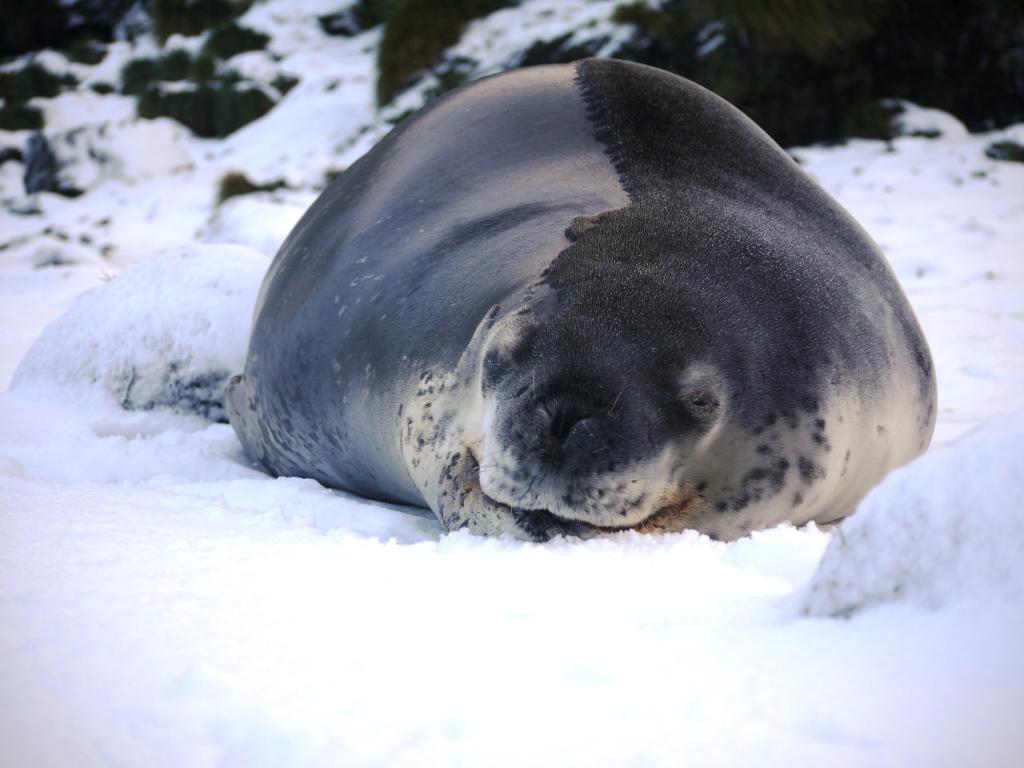
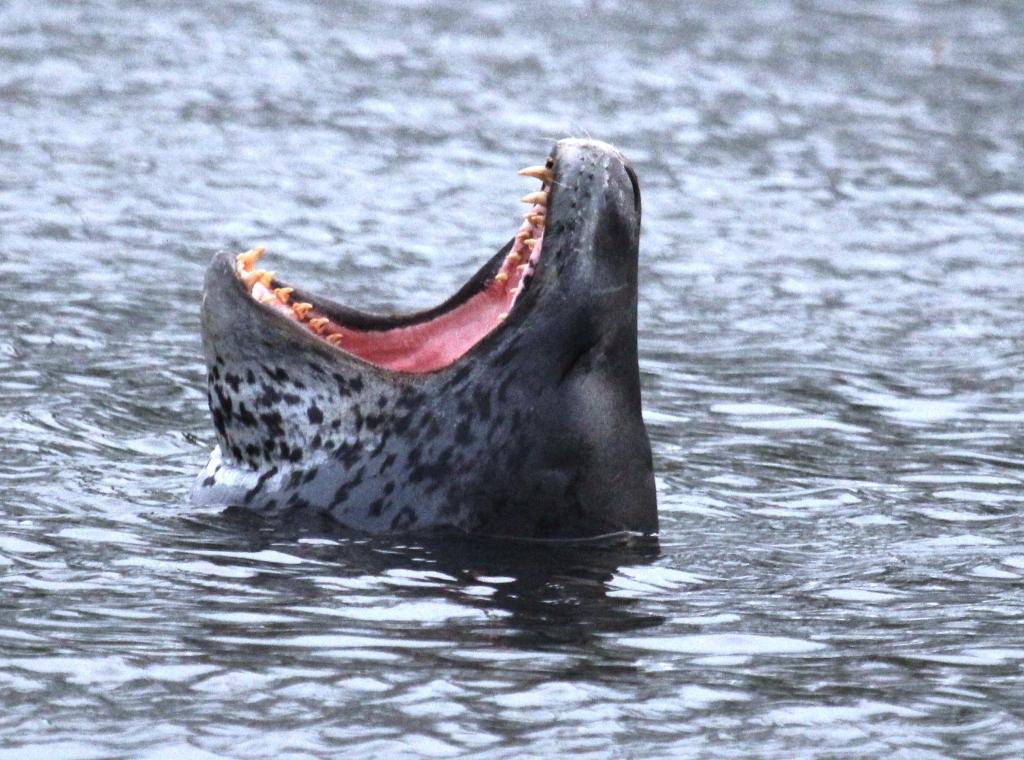
Now I’ve covered most of the birds, it’s onto the non-bird animals, namely the seals! It is continuing to be a good year for Leopard seal sightings. In May we sighted Leopard seals on 25 occasions, compared to last year’s four sightings. Each of the seals are given a name and in May we saw; Max, Paddy Boy, Stephanie (my name sake), Maurice, and Pearce. Hannah our resident seal expert has been out every day patrolling the beaches for sightings. Most of the time they aren’t particularly hard to spot lying on the beaches, or head standing (sleeping vertically in the water with their flippers sticking up). Sometimes we even get to witness them eating, which involves lots of splashing and failing about. It’s not only the human residents of the island who are on the lookout for them eating. As soon as the birds notice a kill they surround the seal trying to grab any pieces. It’s a fairly dangerous occupation but usually the seal is too busy eating to pay attention to the birds.  June was another productive Leopard seal month with 20 sightings. Pearce the seal was first spotted here 22 years ago when he was already an adult, that is one old seal! Hannah managed to retrieve a second GLS logger from a seal, which is very exciting as it is only the fifth to ever be retrieved. I’ll update with where they have been once the data is analyzed. 

Sleepy Leopard seal on the beach.

July has seen a few less sightings but in recent days the number have picked up again. This morning whilst sitting on the jetty a Leopard seal swam over looking at us curiously until a Fur seal jumped in the water and it took off after it. The seal got away as he was a bit too big for the Lep to handle. 
 
Maurice in the bay yawning (photo by Hannah Wood)
Antarctic Fur seal numbers have been increasing on the island again, with some of the big males returning to the island, after being at sea for a few months feeding up following the breeding season. You can definitely tell they are back from the smell! They have a very strong musky odour that you just can’t get away from when walking on the beaches. The numbers are still fairly small, we can still walk along the beaches without getting chased very much. 

A female Antarctic Fur seal
One of the less pleasant aspects of our job is to help seals that have been entangled in fishing gear. This week we were all involved in helping a young male that had a thick layer of parcel tape wrapped tightly around his body. After a bit of a struggle and getting  pretty soggy socks we managed to cut through the tape. The rest of it should now fall off when he is swimming. It’s very satisfying to remove debris from the seals, as in most cases the seal would die when it grew too big and the debris cuts into it. Happy story this time. I just wish people would think about what they discard into the ocean. 

Young male Antarctic fur seal after we had cut the tape from his chest.
The Elephant seals are still hanging out on the beaches lying on piles of rotting kelp. A couple of weeks ago we had our first large(ish) male. He didn’t have the typical big nose, but he was huge! Later in the season we might get some fully grown adult males (fingers crossed). 
The big elephant seal male with me for scale (Photo by Craig Brown).
Elephant seal relaxing on a bed of stinky rotting kelp.

Seals done, it’s onto whales. Usually by this time of year the Southern Right Whales have migrated north from this area, but for some reason they are still here. We have sighted them off the southern side of the island on a number of occasions recently. The easiest way to identify them when they are quite far out to the sea is by what the blow looks like when they breathe out. Southern rights have a V-shaped blow, which is very distinctive. They could possibly be around because of the higher than average water and air temperatures. Hannah and I saw one very close to the cliffs the other day but it wasn’t in the mood to perform any tricks and didn’t show us its tail. 

So mammals completed, it’s back to birds. Over the winter period myself and Jerry (the other bird nerd) count Snowy Sheathbill and South Georgia Pintails (ducks) every couple of weeks. The counts correspond with the highest tides, and we count the same area as was done last year. The reason for the counts is to assess if the rat eradication programme that was carried out this year is having any effects on the birds.  Duck numbers seemed very low, but all of a sudden the ducks have made a comeback, and they are often heard beeping (they have a very weird electronic beeping call) through the night. 

South Georgia Pintail duck- the only duck I know that eats meat and beeps.


Snowy Sheathbill scavenging on a Gentoo penguin carcass.